



A 90-Day Blueprint for Municipal Leaders
What This Guide Will Help You Do
In the next 90 days, you will align departments, stress-test compliance, manage political risk and move your Spatial Development Plan (SDP) to council adoption with confidence.
Phase 1: Internal Discipline Before Public Exposure (Days 1–30)

Approval problems usually begin long before the council meeting. They begin with silent misalignment.
Step 1: Align Departments in One Room — Not Over Email
Bring planning, infrastructure, finance, legal and economic development together. Physically. Not through circular emails.
Go through the draft SDP page by page.
Ask direct questions:
-
Does infrastructure capacity match proposed growth nodes?
-
Is treasury aligned on funding timelines?
-
Are legal advisors satisfied with land use changes?
Why this matters
Fragmented governance is a common weakness in spatial systems. The OECD has repeatedly warned that poor coordination between land use and infrastructure planning undermines implementation (OECD, Redefining Spatial Planning and Development, 2017).
When departments are misaligned, cracks appear during council debate.
Red Flag
If treasury says, “We have not seen this in detail,” your plan is exposed.
Create a risk register:
-
Legal exposure
-
Infrastructure funding gaps
-
Politically sensitive land parcels
-
Stakeholder opposition risks
Assign one accountable lead. Not a committee.
Step 2: Stress-Test Compliance Before Someone Else Does
SPLUMA principles are not decorative. They are legal foundations.
Test your SDP against:
-
Spatial justice
-
Sustainability
-
Efficiency
-
Resilience
Check alignment with the provincial spatial framework and Integrated Development Plan.
Run a legal pre-mortem:
“If this plan is appealed tomorrow, what is the strongest argument against it?”
Case Snapshot: City of Cape Town – MSDF Litigation (2019–2022)
The City’s Municipal Spatial Development Framework faced legal scrutiny from property interests challenging aspects of land use and urban edge management. While the City defended its framework, the case illustrates how spatial policy can be tested in court when stakeholders feel economic rights are constrained.
Lesson: if economic impacts are not clearly justified, legal challenge risk increases.
Document your reasoning carefully. Where trade-offs exist, explain them.
Confidence in council comes from documented compliance.
Step 3: Conduct an Infrastructure Reality Check
Ambitious spatial plans fail when infrastructure lags behind them.
Overlay proposed growth nodes with:
-
Bulk water capacity
-
Electricity supply
-
Transport corridors
-
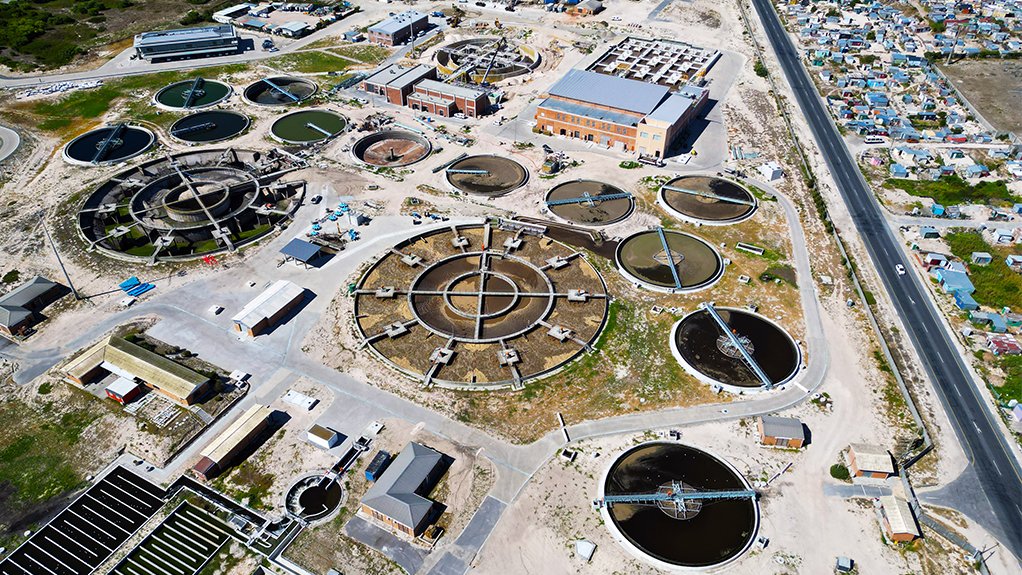
Wastewater treatment limits
Meet treasury early. Align phasing with realistic capital expenditure plans.
Case Snapshot: eThekwini Flood Impact (2022)
After severe flooding damaged infrastructure, development planning and service capacity constraints became urgent issues. The event highlighted how spatial and infrastructure resilience must align. Planning without infrastructure realism creates long-term vulnerability.
Lesson: resilience and capacity must shape land use decisions.
Create a simple matrix:
| Node | Required Infrastructure | Current Capacity | Funding Status | Timeline |
This matrix protects you in council.
Transition
With internal risks controlled, the real test begins. External legitimacy.
Phase 2: External Legitimacy and Political Risk Management (Days 31–60)

A technically strong plan can still fail if stakeholders feel blindsided.
Step 4: Quietly Engage Key Stakeholders Early
Meet major developers, business forums and ward leadership before formal public participation.
Share summary maps. Test reactions.
Ask:
-
“What concerns you most?”
-
“Where do you foresee implementation risk?”
This may feel risky. It is not.
Early engagement reduces organised resistance later. UN-Habitat’s International Guidelines on Urban and Territorial Planning emphasise participatory processes as central to legitimacy (UN-Habitat, 2015).
Case Snapshot: Johannesburg Urban Development Boundary Debates
Adjustments to development boundaries have historically triggered strong developer responses. Early engagement has often reduced escalation by clarifying long-term infrastructure and sustainability rationale.
Lesson: surprise creates conflict. Early dialogue diffuses it.
Create a stakeholder sentiment map:
-
Supportive
-
Neutral
-
High-risk objectors
Step 5: Control the Narrative with Clear Evidence
Spatial plans collapse when explained in technical language alone.
Prepare five clear visuals:
-
Where jobs will concentrate
-
Transport accessibility improvements
-
Housing delivery zones
-
Environmental protection areas
Link each to measurable benefit.
Example:
Instead of saying “densification corridor,” say:
“This corridor reduces average commuting distance by 20% over ten years.”
Common Mistake
Overloading councillors with maps that lack context.
Keep messaging simple. Political leaders need clarity, not theory.
Step 6: Execute Formal Public Participation Precisely
Procedural errors are easy appeal grounds.
Checklist:
-
Gazette notice published
-
Newspaper notice recorded
-
Proof of public display
-
Attendance register signed
-
Objection log maintained
Separate objections into categories:
-
Technical
-
Economic
-
Emotional
Respond in writing. Use policy references. Avoid defensive tone.
Case Snapshot: Knysna SDF Objections (Western Cape)
In several municipal SDF processes across the Western Cape, structured response matrices have been critical in defending plans against appeals. Clear documentation of objections and responses reduces tribunal risk.
Lesson: documentation is protection.
By Day 60, your plan should be stronger, not weaker.
Transition
External resistance reduced. Now comes political precision.
Phase 3: Political Navigation and Final Approval (Days 61–90)

This phase is about execution under pressure.
Step 7: Resolve High-Risk Objections Fast
Categorise objections:
-
Technical: fix wording, adjust phasing
-
Political: negotiate messaging
-
Emotional: provide reassurance
Do not reopen the whole plan.
Focus on high-impact risks.
Track every amendment with justification.
Red Flag
If amendments start expanding beyond high-risk issues, control is slipping.
Step 8: Remove Surprises Before the Council Meeting
Conduct one-on-one briefings with key councillors.
Explain:
-
What changed
-
Why it changed
-
What risks remain
-
Why risks are manageable
Ask directly:
“Do you foresee objections during the meeting?”
Pre-briefings transform debate into confirmation.
Prepare a concise 15-slide deck:
-
Legal compliance
-
Infrastructure alignment
-
Economic rationale
-
Public participation summary
-
Risk mitigation
Clarity builds authority.
Step 9: Secure Formal Adoption with Calm Execution
During the council meeting:
Start with legal foundation.
Move to strategic alignment.
End with implementation realism.
Have legal counsel present. Confirm procedural steps.
If questioned, reference:
-
Risk register
-
Infrastructure matrix
-
Response matrix
Evidence reduces tension.
Monitor the statutory appeal window carefully after adoption.
Approval without drama is not luck. It is structure applied consistently.
Before and After
Before structured preparation:
-
Defensive
-
Reactive
-
Uncertain
After structured preparation:
-
Aligned
-
Documented
-
In control
That difference shapes reputation.
The Moment It All Comes Together
There is always a quiet tension before a council meeting.
You know the plan is solid. Yet there is that question:
“Have we covered everything?”
When departments are aligned, compliance is documented, infrastructure is realistic and stakeholders are engaged early, that question becomes quieter.
Approval stops feeling like a gamble.
It becomes the natural outcome of disciplined work.
You are not defending a draft.
You are presenting a plan that has been tested, refined and strengthened.
No drama. No chaos. No public embarrassment.
Just a lawful, realistic Spatial Development Plan adopted with confidence.
That is leadership under pressure.